
Water Pressure Swings Signal a Failing Tank
Pressure Tank Installation and Replacement in Livingston for systems with short cycling, pressure fluctuations, or waterlogged tanks
Vanya Water Well Services installs and replaces pressure tanks for well systems in Livingston when existing tanks lose their air charge or develop leaks that destabilize water pressure. You notice the pump kicking on every time you open a faucet, or pressure drops suddenly during a shower as the tank fails to hold its cushion of compressed air. A failing tank forces the pump to cycle constantly, which burns out the motor and drives up electricity costs while leaving you with inconsistent water delivery.
Replacement involves draining the old tank, disconnecting it from the pressure switch and piping, and installing a new unit sized to match your system's flow rate and recovery time. Tanks are rated by their drawdown capacity—the amount of usable water they hold between pump cycles. If your household has grown or you have added irrigation zones, a larger tank reduces pump runtime and provides steadier pressure during peak use.
Call Vanya Water Well Services to assess and replace failing pressure tanks before motor damage occurs.
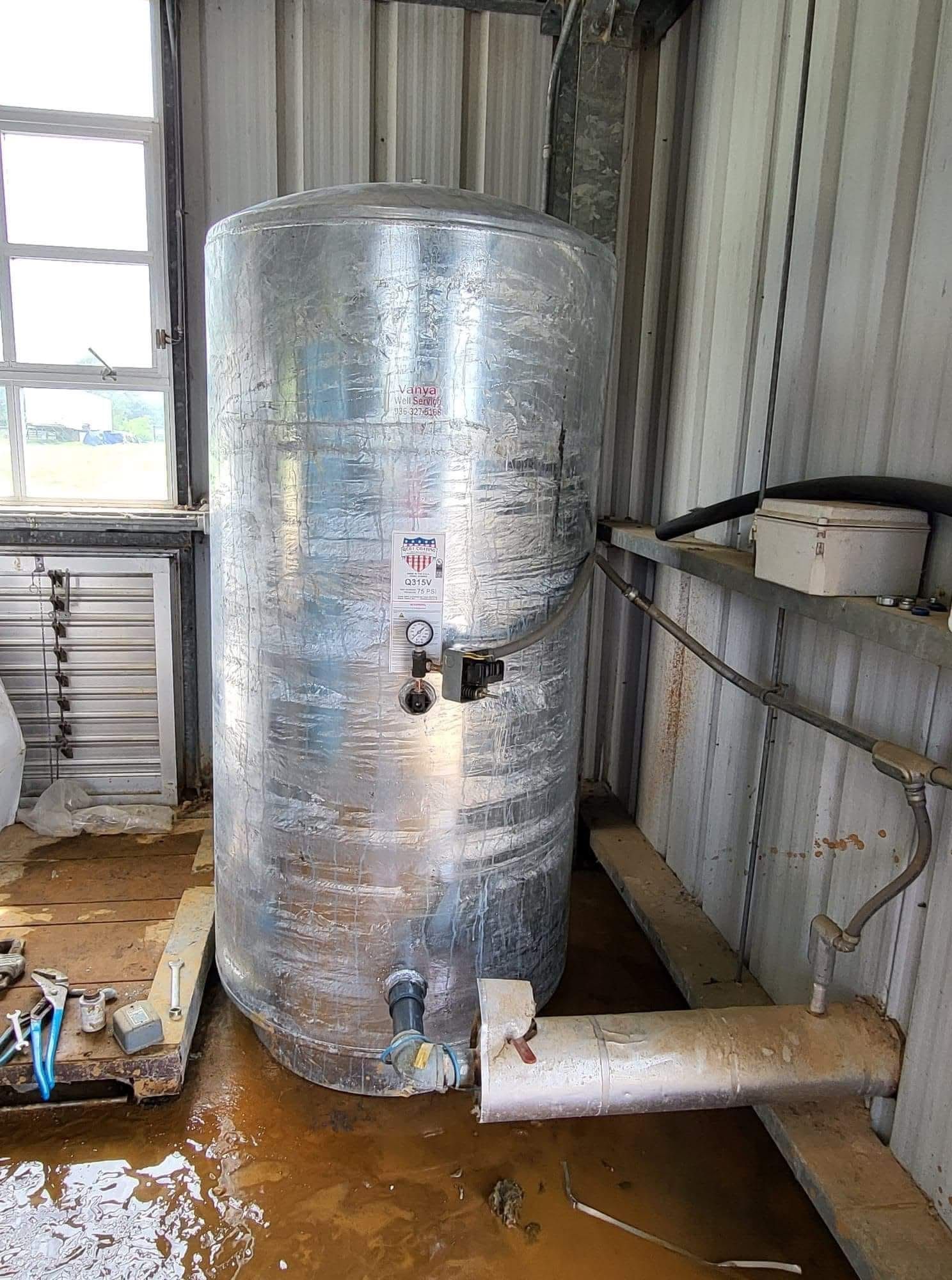
How a Pressure Tank Controls Flow and Protects the Pump
Your pressure tank stores water at high pressure so the pump does not run every time you turn on a faucet. Inside the tank, a rubber bladder or diaphragm separates water from compressed air. As water is drawn out, air pressure drops until the switch signals the pump to refill the tank. When the bladder fails or the air charge leaks, the tank fills completely with water and loses its ability to buffer pressure changes.
After a new tank is installed, you will notice the pump runs less frequently, pressure stays consistent at all fixtures, and you no longer hear rapid clicking from the pressure switch as the system cycles every few seconds. Vanya Water Well Services sets the air charge to match your system's pressure range and tests the setup under normal use to confirm smooth operation.
Installation includes connecting the tank to existing piping and recalibrating the pressure switch. It does not include replacing the pump or control box unless those components are also damaged—each part of the system is evaluated independently to avoid unnecessary replacement costs.
Understanding Pressure Tank Function and Replacement
Homeowners in Livingston often ask why tanks fail and how to choose the right size.
What causes a pressure tank to fail?
Bladder rupture, corrosion of the tank shell, and loss of air charge through faulty valves are the most common causes, all of which prevent the tank from maintaining stable pressure between pump cycles.
How do you size a replacement tank?
Tank size is based on pump flow rate and the desired cycle time—larger tanks allow the pump to run longer between cycles, reducing wear and improving efficiency for high-demand households.
Why does the pump short cycle when the tank fails?
Without air cushion, the tank cannot store pressurized water, so even small draws at a faucet trigger the pump to restart because pressure drops instantly.
When should a pressure tank be replaced instead of repaired?
If the bladder is torn or the tank has rusted through, replacement is the only option—air charges can be adjusted on functional tanks, but structural damage cannot be fixed.
How does tank location affect performance in Livingston?
Tanks installed in unconditioned spaces may experience temperature swings that affect air pressure, so placement in a pump house or conditioned area helps maintain consistent operation.
Vanya Water Well Services handles pressure tank installations and replacements throughout Livingston, ensuring your well system operates efficiently without overworking the pump. Reach out to schedule an evaluation if your system is short cycling or pressure has become unreliable.